




 Search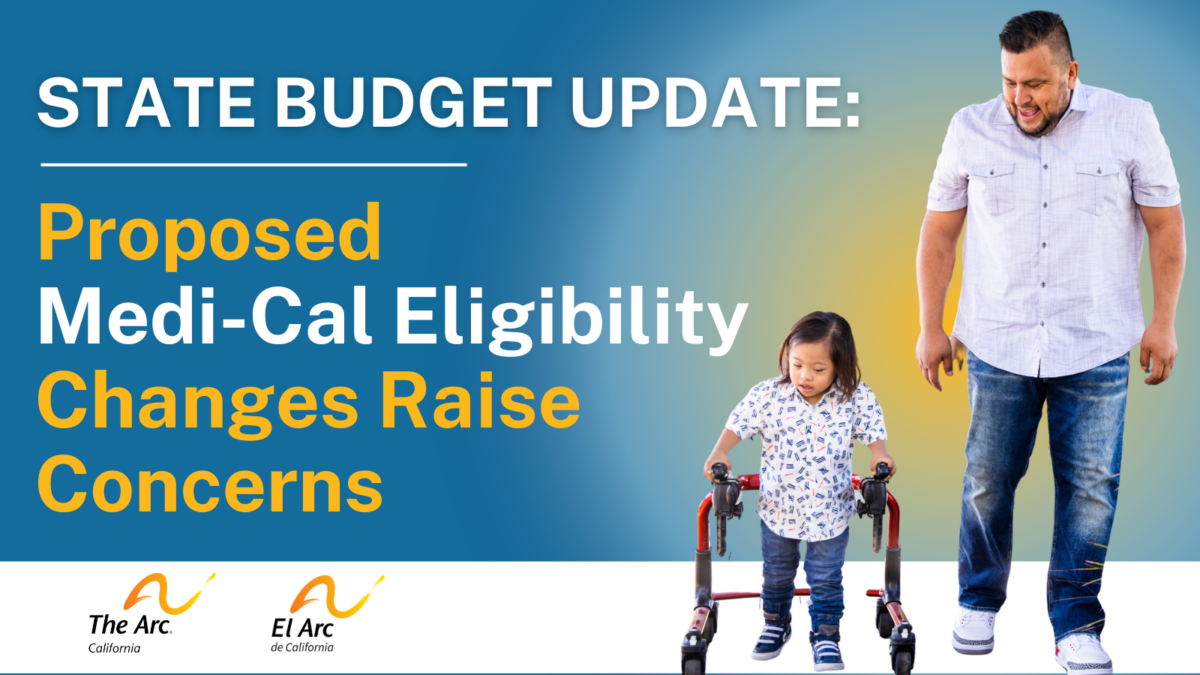
By Julie Schurman, Director of Public Policy, The Arc & UCP California Collaboration
In January, Governor Gavin Newsom released a proposed state budget that includes changes to Medi-Cal eligibility rules for certain Californians. The proposal would impose work requirements and more frequent eligibility checks, every six months, on individuals enrolled in the state-only funded Medi-Cal program.
State-only funded Medi-Cal provides health coverage for Californians who are NOT eligible for federally funded Medicaid (California’s Medi-Cal). This includes immigrants with unsatisfactory immigrant status.
Under the proposal, individuals enrolled in this program would be required to demonstrate work activity and renew their eligibility every six months in order to maintain coverage.
Why Work Requirements Are Problematic for Everyone
Research consistently shows that work requirements in safety net programs do not significantly increase employment. Instead, they create administrative barriers that cause people to lose coverage even when they remain eligible.
The proposal would also require Medi-Cal enrollees to renew their eligibility every six months. Frequent renewals make it harder for people to stay enrolled and increase the workload for already stretched county eligibility offices.
For immigrants without satisfactory immigration status, these requirements create an additional and unique barrier. To verify work activity, employers must certify employment. Many employers are unlikely to provide that certification. As a result, the requirement effectively creates an impossible standard for many people to meet.
Privacy and Safety Concerns
Requiring additional documentation related to employment also raises serious concerns about privacy and safety. Recent federal guidance allows certain information collected through public programs to be shared with federal immigration authorities.
Advocates warn that collecting employment and work authorization information could expose families to additional risks and discourage people from seeking health care altogether.
These concerns extend beyond immigrants without satisfactory immigration status. Fear of enforcement actions can deter immigrants who are legally allowed to be in the U.S. and even U.S. citizens in mixed status families from accessing health services.
Impact on People with Disabilities
Immigrants with disabilities and their families could face additional challenges under this proposal.
While some individuals with medical conditions can be exempt from work requirements under certain circumstances, people must report their disability status to qualify for those exemptions. Many individuals may hesitate to share sensitive information with government agencies due to privacy concerns and fears about immigration enforcement.
This creates another barrier to care for a population that already faces significant challenges accessing services.
A Broad Coalition Is Speaking Out
More than 70 organizations have signed a letter urging the Legislature to reject this proposal. The coalition includes health providers, immigrant rights groups, disability advocates, and civil rights organizations.
The Arc of California and El Arc de California joined this effort alongside organizations such as Western Center on Law and Poverty, Disability Rights California, Health Access California, and the California Foundation for Independent Living Centers.
Together, these groups warn that the proposal would increase administrative costs, reduce access to care, and harm immigrant communities without improving employment outcomes.