




Heartfelt Reflections from Just Two Dads

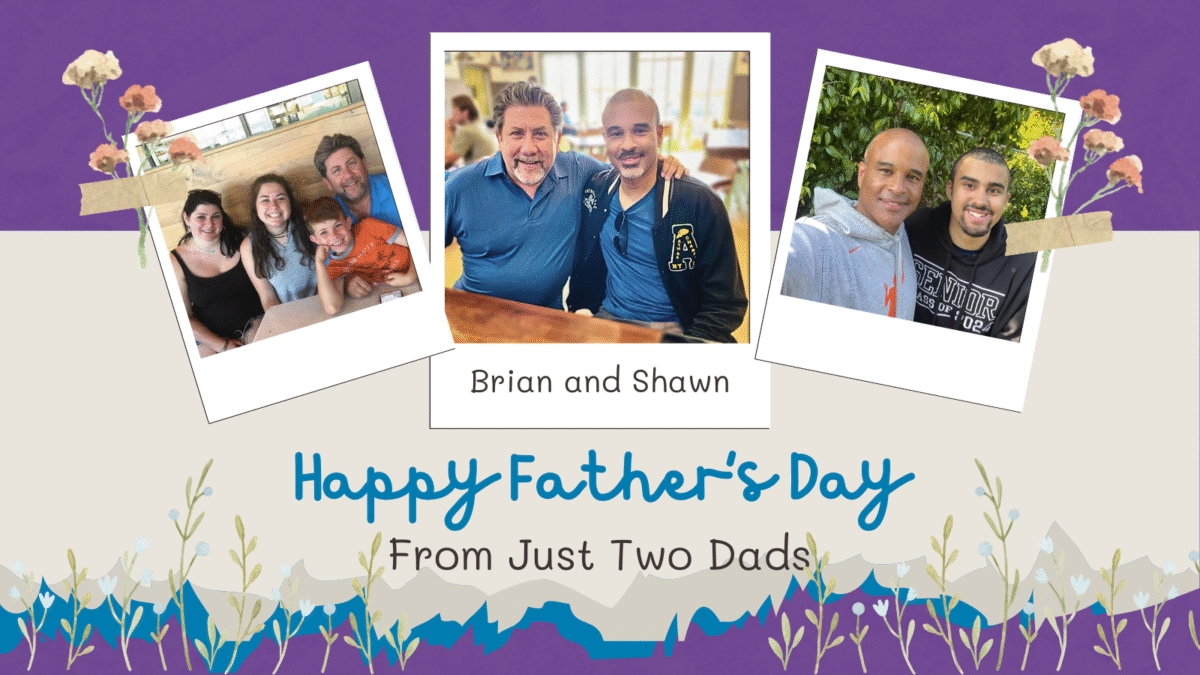
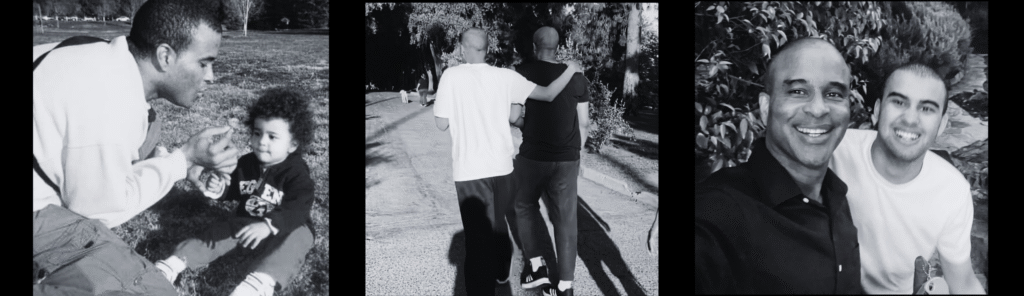
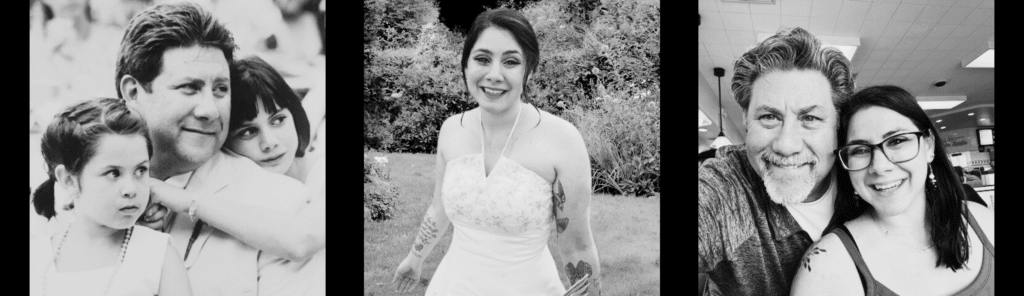
By Shawn Francis and Brian Altounian, Hosts of Just Two Dads Podcast

This Father’s Day, we’re honoring the love, strength, and wisdom of dads raising children with disabilities. We invited Just Two Dads podcast hosts, Shawn Francis and Brian Altounian—fathers, advocates, and longtime friends—to share their personal journeys in fatherhood. In this honest Q&A, they reflect on the beauty and heartbreak, the daily lessons, and the deep transformation that comes with parenting a special child. Their words are not only a tribute to the resilience of families like theirs, but a reminder that empathy, community, and purpose can carry us all forward—especially in times of uncertainty.

Q&A with Shawn Francis

How has being a father to a child with disabilities shaped your identity—not just as a parent, but as a man, partner, and advocate?:
  • SHAWN: It has increased significantly, my effort to be a better person all around. To be more patient, to be more empathetic with others of course, but especially with myself. Some days I regress, but each day I try and it has increased my authenticity as well.

Can you share one moment or lesson from your journey as a dad that reflects the unique beauty of parenting a child with disabilities?

  • SHAWN: My 19-year-old son Elijah who has autism, is going through a phase where he collects brochures of every kind as well as shopping bags. We will enter a store with an agreement that he is not to get any more brochures, but he will at times defy me and politely ask employees for them. On one hand, he’s defying me, on the other hand, he’s advocating for himself and communicating effectively. At first, I was angry and frustrated, but I have compromised. We agree to enter a store, but if he’s going to ask, we’ll discuss it prior. This way, I’m not blindsided and he, in turn, not only advocates for himself but is more willing to keep his end of the bargain.

What is one of the hardest parts of fatherhood in your experience—and how have you grown because of it?

  • SHAWN: I don’t know if it’s one of the hardest parts but one of many revelations I’ve had about fatherhood is the fact that the idea we may have had that our parents had it all figured out when we were kids is a fallacy. They simply did the best they could. For me, that translates to how much we overestimate the notion of having all the answers before we do anything. Perfection is not part of the human experience.

The two of you created Just Two Dads to open up conversations that aren’t always had. What has surprised you most about the response from other dads and caregivers?

  • SHAWN: The fact that most of our interaction comes from women is not only the most surprising thing but also serves to highlight the need for what we do. We are working against the norms of society in that men are encouraged to “just do” or “soldier through”. We are so averse to vulnerability when in fact vulnerability is not only a strength when properly allowed, but has the capacity to unite us, because we can at times see ourselves in the vulnerable.

Right now, we’re seeing state and federal threats to funding for disability services. Why is it so important that families stay informed, and what advice would you give to other parents who may feel overwhelmed or unsure of how to advocate?

  • SHAWN: These conversations can be as difficult to have as they are necessary. They are both. There’s a thin line between being informed and choosing a diet of doom. There’s also a thin line between being positive and optimistic and sticking one’s head in the sand. Misinformation divides us. With that said, we’ve heard of intentions by the current Administration and the President to take away or drastically cut benefits that serve underserved communities, including but not limited to disability community. That should not be ignored. Apathy has its price and it is very expensive.

As fathers, how do you balance the personal and the political—raising a family while also raising your voices?

  • SHAWN: It can be tricky. Because we all share so much as caregivers and parents. The first time a fellow parent not only disagrees with your view, but does so with what feels like venom, it can be jarring. Most people are at their core, caring and empathetic. But people can also be judgmental, unkind, and even nasty. Any underserved community is one that needs empathy. It helps to be certain about who you are as a person. It also helps to remember that empathy in its truest form is WORK, but worthy.

What do you hope people feel or do after reading your story? How can they stand with other families right now?

  • SHAWN: I hope that people take from my story that there is value in their own story, that they may see at least some of themselves in me. I think some people who are not yet affected by any of the things we’ve talked about might wonder why they need to stand with anyone or “what does this have to do with me”? Muhammad Ali said “Service to others is the rent we pay for our room on earth.” Everything that affects one person directly will eventually, at least indirectly, affect others. If you’re not a member of the disability community now, the likelihood of disability touching your life at some point is very high. Whether it’s a loved one, an illness or injury, or your own old age. The best way to stand with other families or with anyone for that matter, is to NEVER tire of curiosity. Ask more questions and make fewer statements. Open your eyes, and more importantly, your heart, and the answer will come to you as to how you can stand with us. Plus, it never hurts to ask “How can I help”?

Q&A with Brian Altounian

How has being a father to a child with disabilities shaped your identity—not just as a parent, but as a man, partner, and advocate?
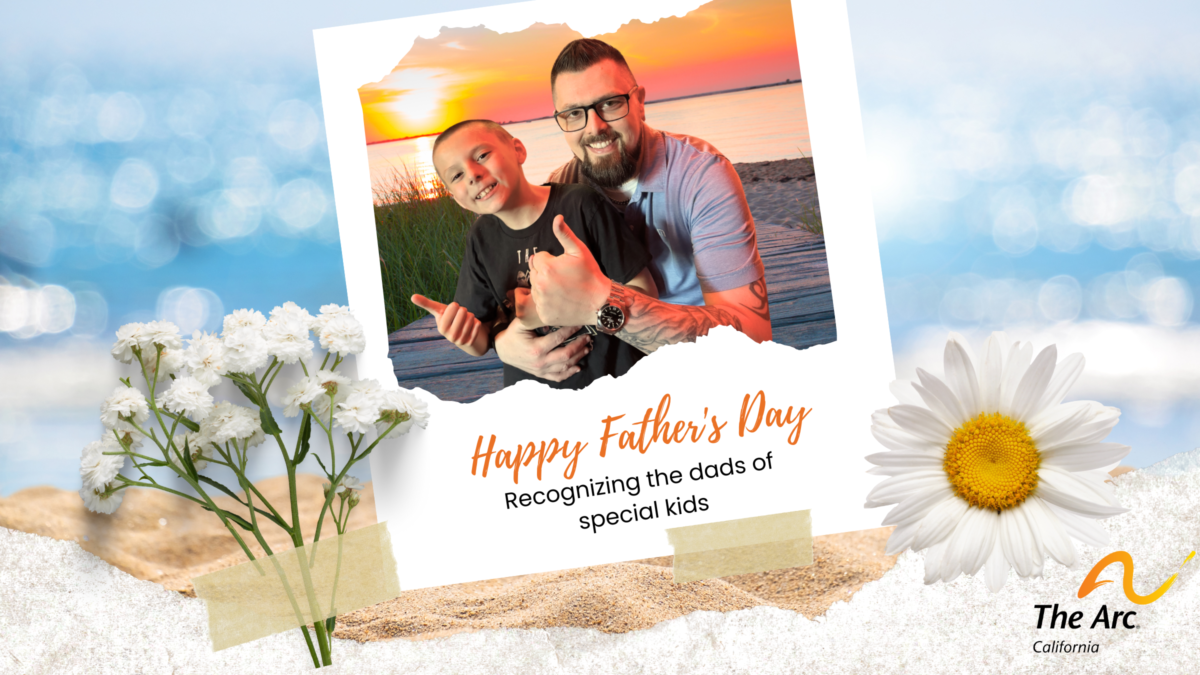
  • BRIAN: I remember when my oldest daughter Jordan was diagnosed with developmental delays, it came as a surprise and a shock as I hadn’t noticed any issues. I realized that up until that point, I wasn’t really PRESENT with my parenting or being a partner. I was there, but not really paying attention. Being a father to a special needs child helped me be focused, present, and aware of my family. It also made me more empathetic to others.

Can you share one moment or lesson from your journey as a dad that reflects the unique beauty of parenting a child with disabilities?

  • BRIAN: I remember when Jordan had colic, and she was having a difficult time in the middle of the night and it was my turn to rock her and try to calm her. I was exhausted and hadn’t slept and was really upset that I was “on baby duty” that night. I tried a lot of things but couldn’t get her to calm down. And then I realized that her illness that night wasn’t her fault. She wasn’t doing anything to me or on purpose – she was just struggling with colic. When I calmed down, she instantly calmed down and went right to sleep. After that, I realized that Jordan, as well as every other person diagnosed with a medical condition isn’t purposefully “doing” anything – they’re just living with a diagnosis.

What is one of the hardest parts of fatherhood in your experience—and how have you grown because of it?

  • BRIAN: Well, my marriage didn’t survive the stress of what we were dealing with. I learned that regardless of your child’s situation, one must spend as much time working on their relationship with their partner as they are caring for their children.

The two of you created Just Two Dads to open up conversations that aren’t always had. What has surprised you most about the response from other dads and caregivers?

  • BRIAN: I think the response we hear most often is “thank you for giving dads a safe space to be engaged in the conversation around special needs.” We have been fortunate to meet some truly amazing people through our podcast, both moms and dads, and we feel truly blessed to be able to provide the platform for these conversations to happen and the positive feedback we get constantly tells us we are on the right track and to keep going.

Right now, we’re seeing state and federal threats to funding for disability services. Why is it so important that families stay informed—and what advice would you give to other parents who may feel overwhelmed or unsure of how to advocate?

  • BRIAN: We are our best advocates for our child. Our neurologist gave us a list of all of the things Jordan would NEVER be able to accomplish such as living alone, graduation high school, driving, holding a job and we were told she’d need assisted living her whole life. Jordan, who will be 30 in November, has overcame ALL of that because our family worked together to address her unique needs, and we went out to find the support on our own. We never counted on disability services funding. Considering what’s happening today, I advise parents to do a few things: 1) don’t believe the “sky-is-falling” rhetoric – wait to see what services will actually be impacted by changes in government budget plans. 2) Look at the services you are currently taking advantage of and find a Plan B and, possibly, a Plan C if funding for those particular service gets impacted. As a community, we are resourceful. Every time something works against us, we find a way to solve it.

As fathers, how do you balance the personal and the political—raising a family while also raising your voices?

  • BRIAN: We can only do what we can do. Like anything, developing a work-life balance is critical for all of us. People generally know where I stand on certain issues but that’s because I’m clear on my communication. We can’t be on all sides at the same time. The objective is to teach our children about tolerance and empathy and how to utilize critical thinking. There are so many issues that have multiple facets, so we have to do what’s right for our families and ourselves.

What do you hope people feel or do after reading your story? How can they stand with other families right now?

  • BRIAN: I end every episode with the same saying that Empathy and Love are more important now than at almost any other time. Rather than being judgmental, have some empathy for those around you and always look at the world through “Lenses of Love” and the world will look a lot more beautiful. Reach out to someone who may need a pep-talk or a shoulder to cry on or just some general help.

Join Brian and Shawn for a Caring Conversation on Tuesday, June 17 at 11:00 a.m. (PST) via Zoom.  Click HERE to register! 

Happy Father’s Day to all the dads of special kids!

By Nick Lutton, Family Engagement Program Manager, Family Voices of California and dedicated father

Father’s Day is a time to honor and celebrate the unwavering dedication, love, and resilience of dads everywhere. This is something that is often overlooked in the disability world. As a father of two incredible boys with special healthcare needs, I have embarked on a journey filled with unique challenges and profound joys. My 11-year-old son, Mason, who has severe autism and an intellectual disability, has taught me the true meaning of patience and unconditional love. His echolalia, a way he communicates, has become a language in our household—a beautiful reminder that communication transcends words.

When my son was two years old, he was assessed by the regional center at my mother’s request. She had noticed things in Mason that neither my wife nor I had observed. Why would we? He was our first child, and we both loved him so much. However, once the concerns were brought to our attention, we began to see what she had noticed. My son hardly made any eye contact with me. He also had eating issues, and there were times when he would not sleep for 48 to 72 hours. He wasn’t reaching his milestones, and the regional center diagnosed him, which shocked me.

To be completely candid, for the first 2 to 3 years after we began the litany of services, including early intervention such as speech and language pathology, ABA therapy, occupational therapy, and social skills therapy, I was still in denial. I was removed from the entire situation, and all I knew was that there were people inside my home daily; little did I know that that would not end anytime soon, if ever. Then came all the paperwork… a constant barrage of paper via mail, email, doctors’ appointments, and government agencies needing more and more information so my son could receive services to catch up. It never ended, and I thought it would be okay. It wasn’t.

Most people go through the initial grieving process of being sad or depressed or being lost in a state of melancholy; that wasn’t me at all. I felt cheated; cheated out of all the conversations that I know I will never have with my son. Before my father passed away, he and I would have deep conversations about life, love, and death, and I miss those. My son won’t watch TV with me, and I cannot take him to a large event like a baseball game, or talk with him about the big things in life such as when my father passed away. Mason doesn’t understand the concept of death or finality, and my list of grievances could go on forever.

That doesn’t mean that my son is not an amazing human being; he recites Mozart and Bach with unbelievable accuracy. He writes out diagrams of rooms that he has only been in for a moment. Even with his behavioral outbursts, he is kind and loving. I fear for the future, but I must remember to live in the present with him.

I speculate that most fathers feel a deep sense of pride in their children, but at the same time, some loss. And even though we carry the weight, it does not mean that it is not heavy! Most of us live with a lot of emotion held deep inside. For this Father’s Day, I hope that you can hug your sons and daughters and be appreciated not only by your family but by the community for all the weight that you hold.

I leave you at the foot of the mountain with Sisyphus, the king of Corinth, whom the gods condemned to roll a boulder up a hill for eternity only to have it roll back down. They believed that no punishment could be as severe as remedial labor, the repetitive task that could drive anyone mad. At the foot of the mountain, before he labors, Sisyphus smiles. The satisfaction does not lie in the result but in the act of pushing the boulder uphill. We must envision Sisyphus Happy!

This Father’s Day, I am excited to share the launch of my YouTube channel, “Dads for Disability.” This platform is designed to provide guidance, insights, Education and a supportive community for dads and family members raising children with special healthcare needs and intellectual disabilities. Our first educational film, a deep dive into the Individuals with Disabilities Education Act (IDEA), will be available soon. Through this channel, we aim to empower and uplift families, offering practical advice and heartfelt stories from our community.

Please consider liking and subscribing as well as sharing on your social media platforms.

Happy Father’s Day to all the dad’s of special kids!

A Special Father’s Day Message

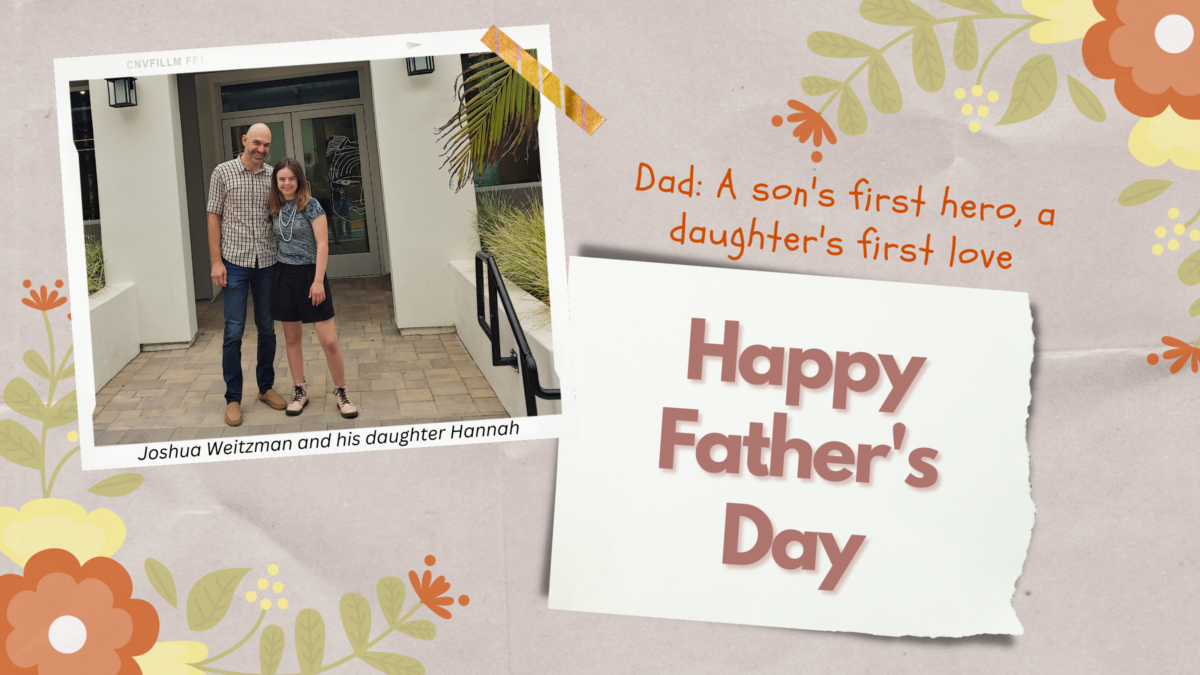
By Joshua Weitzman, Executive Director, Alpha Resource Center of Santa Barbara and father of Hannah

Sixteen years ago, my wife and I sat in a hospital room with our four-day-old daughter, Hannah. Hannah has Down syndrome. We’d gone home from the maternity ward only to end up back in the children’s wing via a panicked trip to the emergency room the next day. 

Through a series of events, we learned that Hannah was not getting nutrients into her little body. This was primarily a result of her low muscle tone, and it was exasperated by our lack of knowledge as her parents about Down syndrome. We had gone through various emotions that week, spanning the range from joy to disorientation to fear. However, at that moment, the feeling that stood out was loneliness. 

Thankfully, it was later that day that the local Arc Chapter, Alpha Resource Center of Santa Barbara, reached out to us. They came to visit us in our hospital room where they shared valuable information and let us know we we’re not alone. From that moment our learning curve was steep as we began to understand our new world. 

Over the next several years my role grew from father to board member to Executive Director. During that time, I discovered there was an even larger community of families like mine. Not only did Arc Chapters exist throughout the state, the Arc of California, of whom many of those local chapters are members, was working on behalf of us all to ensure everything from funding for the vital services we’d received for Hannah to protections for those with intellectual and developmental disabilities (IDD) through new legislation, all while connecting families and organizations throughout the state.

We couldn’t have done it alone. I couldn’t be the father Hannah needs on my own. I’ve learned from the fathers who came before me. I watched firsthand as fathers advocated for their children’s individual needs. I heard the stories of generations of fathers lending their voices to the cause, inciting change at the state level. This Father’s Day, I’d invite other fathers to join the effort. We are making a difference.

Whether life has recently brought you into the IDD community, you’re a longtime family member of an individual with IDD, or perhaps a community member that understands the importance of inclusion and opportunity for those with an IDD, there’s local and state levels of involvement and resources that can allow you to make an impact, too. 

My family will forever be grateful for the work of the Arc of California and local Arc Chapters in every community. While I never imagined this path for my life or family, I wouldn’t change it for the world. It’s led me into relationship with some of the most amazing people I know – and at the top of that list is Hannah.