






 Search
Tell Assembly Leadership to Reject Governor’s Proposal to Impose Harmful Asset Caps
More than 525,000 Californians with intellectual and developmental disabilities rely on Medi-Cal, In-Home Support Services (IHSS), and other community-based supports for healthcare and to live safely, independently, and fully included in their communities.
California has made an important commitment to inclusion through the Lanterman Act, other disability rights laws and improved access to Medi-Cal and IHSS. But there is a real threat that some of this will be undone. Governor Newsom’s May Revision proposes bringing back strict asset limits (caps) for people who rely on Medi-Cal and IHSS beginning January 1, 2027.
WHAT IS THE ISSUE?
An asset cap is a rule that limits how much a person can own or save and still qualify for Medi-Cal and In-Home Supportive Services (IHSS).
Under the Governor’s proposal:
-
- Individuals could have no more than $2,000 in savings or assets.
- Couples could have no more than $3,000 in savings or assets.
This is not simply a one-time requirement to qualify for benefits. It is an ongoing requirement to remain in poverty. The asset cap includes everything a person owns, with some narrow exceptions. A person cannot save for emergencies, future expenses, security deposit for rental housing, or financial stability because exceeding the asset limit can put their healthcare and IHSS at risk.
The proposal would force many Californians with disabilities to live in a constant state of poverty knowing that even minimal savings could result in the loss of life-sustaining benefits.
The proposed limits bear no relationship to the actual cost of living in California. As of June 2026, the average rent in California is $2,228 per month, with rental deposits to secure an apartment being a similar amount. Yet the proposed asset limit for an individual is only $2,000. The asset limit is literally less than the average monthly rent or the average rental deposit in the state. The proposed asset limit asks people with disabilities to choose between the basic supports they need to stay alive and healthy and the ability to live independently.
For many people with disabilities, Medi-Cal is not just health insurance. It is the only way to access life-saving prescription medications, medical supplies, therapies, and durable medical equipment such as wheelchairs, communication devices, feeding equipment, and breathing apparatus. Without Medi-Cal, many people would simply be unable to afford the care and equipment they need to survive.
IHSS funds caregivers who assist with essential daily activities such as getting out of bed, bathing, dressing, using the restroom, preparing meals, taking medications, and maintaining a safe living environment. IHSS provides basic survival needs for many people with disabilities.
Reinstating these asset limits would push many people with disabilities deeper into poverty, increase the risk of homelessness, and undermine California’s longstanding commitment to economic self-sufficiency and disability rights.
WHAT IS THE SOLUTION?
The California Senate budget proposal rejects the Governor’s harmful asset cap proposal. The Assembly should adopt the Senate’s budget plan and reject any effort by the Governor to bring back Medi-Cal and IHSS asset limits.
People with disabilities should be able to save for emergencies and plan for their future without fear of losing healthcare or critical supports.
TAKE ACTION BEFORE JUNE 15th
Contact California State Assembly Speaker Robert Rivas and urge him to:
-
- Adopt the Senate’s budget proposal.
- Reject the proposed Medi-Cal or IHSS asset caps.
EMAIL: speaker.rivas@assembly.ca.gov
CALL: 916-319-2029
SHARE: Facebook | Instagram | LinkedIn
CLICK HERE to view sample email, phone call script and social media messages.
Save and use social media graphic below:
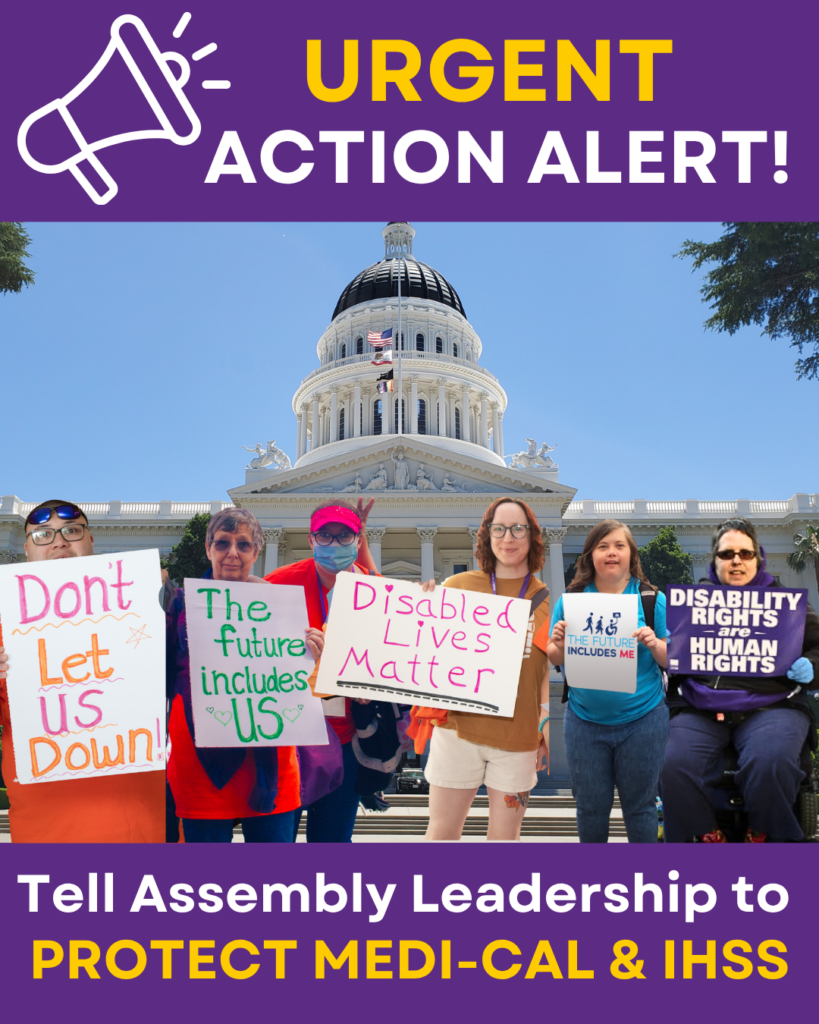 California should not balance its budget on the backs of people with disabilities and those who rely on Medi-Cal and IHSS to live safely and independently in their communities.