





 Search
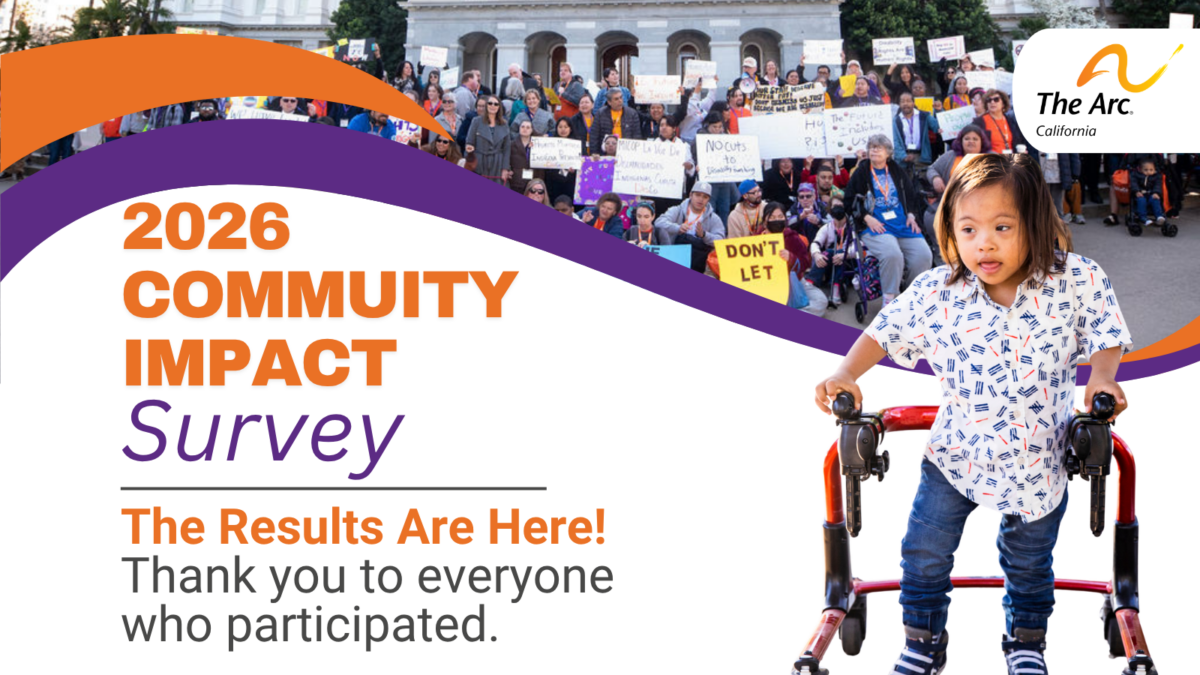
Thank you to the nearly 450 people who completed The Arc of California’s 2026 Community Impact Survey.
People with intellectual and developmental disabilities, family members, caregivers, direct support professionals, service provider staff and advocates shared what is working well, where people continue to encounter barriers and what The Arc of California should prioritize in the coming year.
This input is especially valuable as we evaluate our strategic priorities and establish our public policy and advocacy goals. The survey helps ensure that our work reflects the real experiences and needs of the communities we serve.
SERVICES ARE MAKING A DIFFERENCE, BUT GAPS REMAIN
Many respondents told us that existing services and supports are having a positive impact. Among those who answered the question, 70% said their current support services were meeting their needs completely or mostly.
Case management and service coordination, day programs and community access, social and recreational programs, IPP and IEP support, respite care, transportation and the Self-Determination Program were among the services respondents found most helpful.
At the same time, more than one-third of respondents said accessing needed services was somewhat or very difficult. The most commonly reported barriers included limited service availability, a lack of information and long waitlists. Thirty-eight percent said they would like help connecting with additional services and supports, while another 27% said they might want help.
THE COMMUNITY IDENTIFIED CLEAR ADVOCACY PRIORITIES
Respondents selected several issues they believe The Arc of California should prioritize (in the order listed below):
-
-
- Better wages for direct support professionals
- Affordable and accessible housing
- Resources and support for family caregivers
- Disability rights and inclusion
- Medi-Cal benefits
- Service provider rate increases
- Employment opportunities
-
Concerns about health care and public benefits were especially strong. Seventy-eight percent of respondents reported that they or the person they support were enrolled in Medi-Cal. Eighty-seven percent were somewhat or very concerned that people could lose Medi-Cal because they did not understand new work requirements or could not provide the necessary information. More than half were unsure whether the new Medi-Cal work rules applied to them or the person they support.
TURNING COMMUNITY INPUT INTO ACTION
These findings will help The Arc of California identify services that should be protected or expanded, address persistent barriers and communicate the community’s priorities to policymakers and state leaders.
The survey also showed that our community wants to remain engaged. Seventy-nine percent of respondents said they were likely or very likely to participate in future advocacy and engagement opportunities with The Arc of California.
We are deeply grateful to everyone who took the time to participate. Your experiences will help shape our strategic planning, advocacy and public policy work for the coming year. We look forward to sharing more about how these findings are translated into action.