






 Search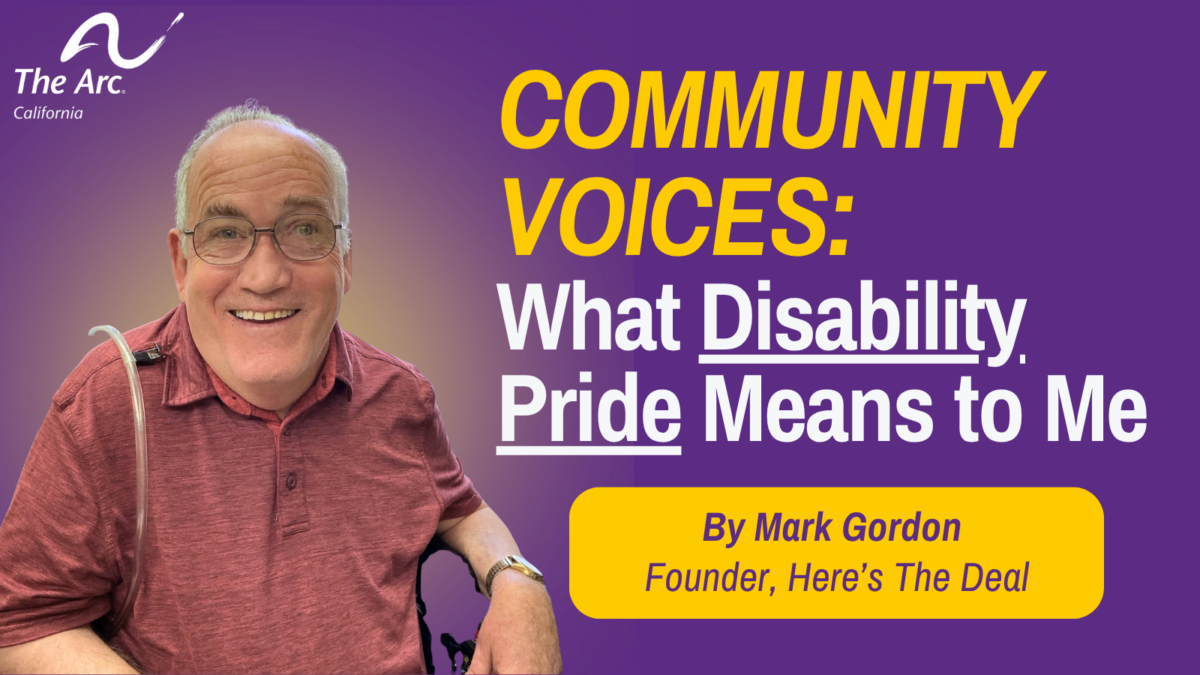
By Mark Gordon, Disability Rights Advocate, Founder of Here’s The Deal
When people ask me what Disability Pride means, my answer is simple: It means knowing my worth and refusing to let anyone else define it.
I was born three months premature in La Mesa, California. Soon after I was born, doctors told my parents that because of my disabilities, they should consider placing me in an institution.
Thankfully, my parents never entertained that idea. They brought me home instead, surrounded me with love, and raised me to believe something that has shaped my entire life: I have value, and I have something meaningful to contribute to the world.
At around 18 months old, my parents learned that I had cerebral palsy. Like many families receiving a diagnosis, they didn’t know exactly what that would mean for my future. What they did know was that they believed in me. They never focused on what I couldn’t do. Instead, they encouraged me to discover what I could do.
That belief made all the difference.
Growing up, there were plenty of people who underestimated me. I still remember a psychologist questioning how someone with a severe disability could have such confidence and self-esteem. My parents simply taught me that disability was one part of who I was. It was never the measure of my worth.
Because of them, I grew up believing I could pursue my dreams.
When I was 21 years old, I moved out of my parents’ home and went to college. I earned both my bachelor’s and master’s degrees in Public Administration. After working for a nonprofit organization for several years, I entered law school because I wanted to make a difference. Life had other plans.
After an injury changed my path, I realized I didn’t need a law degree to create meaningful change. In 1998, I founded Here’s The Deal, an organization that provides services through the California Department of Developmental Services for people served by Far Northern Regional Center.
What started with me and two part-time employees has grown into an organization with more than 100 staff members who support between 200 and 225 people every month. I couldn’t be prouder.
When people talk about disability services, they often talk about budgets and numbers. I understand why those conversations matter. But behind every budget line is a real person with hopes, dreams, talents, and goals.
I’m one of those people.
The supports I receive through programs like Medi-Cal, In-Home Supportive Services (IHSS), and California’s developmental services have given me the opportunity to work, pay taxes, build a career, and contribute to my community. That is what Disability Pride means to me.
It means having the opportunity to live the life my parents always believed I could have. It also means recognizing that productivity looks different for everyone. Every person deserves the opportunity to contribute in ways that reflect their own strengths and abilities. Success should never be measured by whether someone looks or lives exactly like everyone else.
For me, success is building a life filled with purpose while helping others build theirs.
I know there are difficult decisions facing our state and our nation. I understand that budgets require tough choices. But I hope decision-makers never lose sight of the people behind those decisions.
When discussions focus only on costs, it’s easy to overlook the extraordinary value that people with disabilities bring to our communities every day.
I am living proof of what is possible when someone believes in you. My parents believed in me.
California invested in me. My community believed in me.
Because of that, I have spent decades giving back, creating opportunities for others, and helping people with disabilities live full and meaningful lives.
Disability Pride is not about pretending that life is easy. It isn’t about ignoring the challenges we face. It is about rejecting the idea that disability somehow makes a person’s life less valuable. Every person deserves the opportunity to belong, to contribute, to work if they choose, and to live with dignity.
I often think about what might have happened if my parents had listened to those early recommendations to institutionalize me. My life would have been very different. Instead, they chose hope. They chose possibility. They chose to see me for who I could become rather than who others expected me to be. That is the greatest gift they ever gave me.
Today, Disability Pride means carrying that gift forward. It means ensuring that every child with a disability grows up hearing the same message my parents gave me all those years ago:
You have value.
You belong.
And never let anyone else tell you otherwise.